
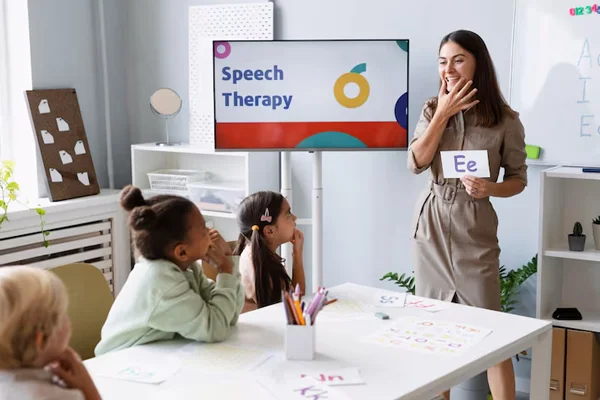
Speech, language and learning are important parts of a child's development. Children acquire communication and learning skills at different rates, but persistent difficulties with speaking, understanding language, reading, writing, attention or learning may require professional evaluation.
Early identification of speech and learning concerns can help parents understand the reason behind a child's difficulties and explore appropriate support. A child who struggles at school is not necessarily lacking intelligence or motivation. Learning challenges can occur for many different reasons, and identifying the underlying factors is an important first step.
For families looking for speech and learning assessment in Paschim Vihar, Dr. Kriti Nautiyal, Pediatrician & Child Development Specialist, provides child-focused developmental evaluation and guidance for communication, learning, behaviour and overall development.
Speech and learning concerns refer to difficulties that affect a child's ability to communicate, understand information or acquire academic skills.
Speech and language concerns may involve:
Learning concerns may involve:
These concerns can occur individually or together.
Speech and language are related but different.
Speech refers primarily to how a child produces sounds and words.
Language involves understanding and using words to communicate ideas, needs and thoughts.
A child may have difficulty producing certain sounds while understanding language appropriately. Another child may have difficulty understanding instructions or expressing themselves despite having clear speech.
A developmental assessment can help identify which areas are affected.
Parents may notice that their child:
Children develop language at different rates, but persistent concerns should be discussed with a pediatrician rather than simply waiting for the child to "catch up."
Communication plays a major role in learning, social interaction and emotional development.
When speech or language difficulties are identified early, appropriate support can be considered. Depending on the child's needs, this may involve speech and language therapy, developmental support, hearing evaluation or additional assessment.
Early support can help children improve functional communication and participate more confidently at home and school.
Hearing plays an important role in speech and language development. Children with hearing difficulties may have problems understanding or producing language.
If a child has delayed speech or does not consistently respond to sounds or their name, hearing should be considered as part of the evaluation.
A pediatrician may recommend an age-appropriate hearing assessment when appropriate.
Learning difficulties can affect different academic skills. A child may struggle with one subject while performing well in others.
Parents or teachers may notice:
Learning difficulties should be assessed carefully rather than assuming that the child is simply not trying hard enough.
Learning difficulties can have multiple contributing factors.
These may include:
A comprehensive assessment can help identify the areas that may be contributing to a child's difficulties.
As children progress through school, expectations for communication, reading, writing, attention and problem-solving increase.
Some difficulties may become more noticeable when academic demands become greater.
Parents should consider discussing concerns with a pediatrician if their child consistently:
Early evaluation can help determine whether additional educational or developmental support may be useful.
Attention difficulties can sometimes affect academic performance. Children who struggle to concentrate may have difficulty completing tasks, following instructions or organizing schoolwork.
However, poor attention does not automatically mean that a child has ADHD.
A comprehensive assessment considers the child's attention, behaviour, learning profile, sleep, emotional well-being and developmental history.
If ADHD is suspected, further evaluation may be recommended.
Some children with autism experience speech or language differences. However, speech delay alone does not mean that a child has autism.
Autism involves a broader pattern of differences in social communication and interaction along with restricted or repetitive behaviours or interests.
If a child has speech delay combined with concerns about social interaction, play, behaviour or sensory responses, a broader developmental evaluation may be appropriate.
A developmental assessment may begin with a detailed discussion with the parents.
The pediatrician may review:
The child's behaviour and communication may also be observed during the consultation.
Depending on the findings, the child may be referred for additional assessment by professionals such as a speech-language therapist, psychologist, occupational therapist, special educator or other specialist.
Speech-language therapy may help children with difficulties involving:
The therapy plan should be individualized according to the child's specific communication needs.
Parents can support learning by creating a positive and structured environment.
Helpful strategies may include:
Children often learn best when learning activities are supportive rather than stressful.
Parents should consider a developmental assessment if they notice:
Parents do not need to wait until a child starts school to discuss developmental concerns.
For families searching for speech and learning assessment in Paschim Vihar, early professional guidance can help clarify whether a child's difficulties are related to speech, language, learning, attention, hearing, development or another factor.
Dr. Kriti Nautiyal, Pediatrician & Child Development Specialist in Paschim Vihar, provides developmental evaluation and pediatric guidance for children with concerns related to communication, learning, attention, behaviour and developmental milestones.
The goal is to understand the child's individual needs and guide families toward appropriate support when required.
Parents should discuss persistent concerns about delayed speech, limited vocabulary, difficulty understanding language or unclear communication with a pediatrician.
No. Speech delay can have many causes, including language development differences and hearing difficulties. A comprehensive developmental assessment is needed to understand the underlying concern.
Academic difficulties can have many causes, including specific learning difficulties, attention problems, language challenges, emotional factors, sleep issues or other developmental concerns. An assessment can help identify possible contributing factors.
Speech and language therapy can support children with a range of speech and communication difficulties. The type of therapy depends on the child's individual needs.
If a child has persistent developmental, speech or learning concerns, it is better to discuss them with a pediatrician rather than relying solely on waiting. Early assessment can help identify appropriate support.
Communication and learning skills play an important role in a child's confidence, education and social development. When parents notice persistent difficulties, early evaluation can help them understand their child's needs and explore appropriate support.
If you are looking for a Pediatrician in Paschim Vihar for speech and learning concerns, developmental assessment, attention difficulties or child development monitoring, Dr. Kriti Nautiyal – Pediatrician & Child Development Specialist provides comprehensive, child-focused care.
Whether your child has delayed speech, difficulty communicating, struggles with reading and writing or faces persistent learning concerns, professional developmental guidance can help identify the next appropriate steps.
Schedule a consultation with Dr. Kriti Nautiyal to discuss your child's speech, communication, learning or developmental concerns.


Write a Reply or Comment