
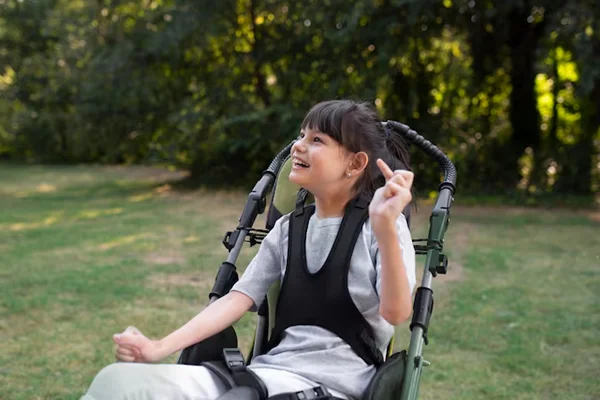
Cerebral Palsy (CP) is a group of neurological conditions that affect movement, posture and muscle coordination. It develops because of differences or injury affecting the developing brain and can influence a child's ability to move, maintain balance and perform everyday activities.
The effects of cerebral palsy vary considerably from child to child. Some children may have mild movement difficulties, while others may require significant support with mobility, communication or daily activities.
Although cerebral palsy is a lifelong condition, early identification and appropriate multidisciplinary care can help children develop skills, improve function and achieve greater independence.
For families looking for Cerebral Palsy assessment and child development care in Paschim Vihar, Dr. Kriti Nautiyal, Pediatrician & Child Development Specialist, provides child-focused developmental evaluation, monitoring and guidance.
Cerebral palsy refers to a group of disorders affecting movement and posture that are attributed to disturbances in the developing fetal or infant brain.
Children with cerebral palsy may experience difficulties involving:
Some children may also experience associated challenges involving speech, communication, vision, hearing, feeding, learning or seizures.
The severity and combination of symptoms are different for every child.
Cerebral palsy can develop due to factors affecting the developing brain before, during or after birth.
Possible risk factors include:
In many children, the exact cause cannot be identified.
Having a risk factor does not mean that a child will definitely develop cerebral palsy.
Early signs can vary depending on the type and severity of cerebral palsy and the child's age.
Parents may notice:
Not every child with delayed motor development has cerebral palsy. A developmental assessment is needed to understand the cause of the delay.
Children generally acquire developmental skills within broad age ranges. These include head control, rolling, sitting, crawling, standing and walking.
A delay in one milestone does not automatically indicate cerebral palsy. However, persistent motor delays or unusual movement patterns should be discussed with a pediatrician.
Regular developmental monitoring can help identify concerns early and determine whether further evaluation is required.
Cerebral palsy can be classified according to the predominant movement or muscle-tone pattern.
This is the most common type and is characterized by increased muscle tone and stiffness.
Children may experience difficulty with:
Children may have involuntary movements that can affect posture and movement control.
This type primarily affects balance, coordination and control of movement.
Some children have characteristics of more than one movement type.
The classification and functional impact should be assessed individually.
There is no single blood test that confirms cerebral palsy.
Diagnosis involves a detailed evaluation of the child's:
Depending on the child's age and symptoms, additional investigations such as brain imaging may be considered.
Early identification can be particularly helpful because it allows developmental support to begin as soon as appropriate.
Early intervention is an important part of supporting children with cerebral palsy.
Depending on the child's needs, interventions may focus on:
The earlier developmental needs are recognized, the sooner families can explore appropriate therapies and support.
Physiotherapy can help children develop and maintain movement skills.
A physiotherapist may work on:
The specific therapy plan should be individualized according to the child's functional abilities and goals.
Occupational therapy can support children with everyday activities and fine motor skills.
It may help with:
The objective is to help children participate as independently as possible in daily life.
Some children with cerebral palsy may experience difficulties with speech or communication.
Speech and language therapy may help with:
Children who have difficulty speaking may benefit from alternative or augmentative communication approaches depending on their individual needs.
Some children with cerebral palsy may experience difficulty chewing, swallowing or maintaining adequate nutrition.
Parents should discuss concerns such as:
A pediatrician can assess the child and recommend appropriate nutritional or feeding support when necessary.
Some children with cerebral palsy may also experience seizures.
Parents should discuss unusual staring episodes, abnormal movements, loss of awareness or suspected seizures with their pediatrician.
If a child experiences a first seizure, prolonged seizure or difficulty recovering after a seizure, urgent medical evaluation is required.
Cerebral palsy can sometimes be associated with additional difficulties involving vision, hearing or learning.
Regular assessment can help identify these concerns and allow appropriate support.
A comprehensive approach to care considers more than physical movement. Communication, learning, social interaction, emotional well-being and independence are also important aspects of a child's development.
Parents can support their child by:
Children should be encouraged to participate in everyday activities according to their abilities rather than being defined solely by their diagnosis.
Cerebral palsy is not a condition that should be managed through a single consultation. Children's needs can change as they grow.
Regular follow-up allows healthcare professionals to monitor:
As children enter school and adolescence, their healthcare and developmental requirements may change, making ongoing monitoring important.
Parents should discuss their child's development with a pediatrician if they notice:
Early evaluation can help determine whether the child needs additional assessment or developmental support.
For families searching for Cerebral Palsy care in Paschim Vihar, a child-focused approach can help address both medical and developmental needs.
Dr. Kriti Nautiyal, Pediatrician & Child Development Specialist in Paschim Vihar, provides developmental assessment and pediatric guidance for children with motor delays, developmental concerns and cerebral palsy.
Depending on the child's needs, ongoing care may involve coordination with physiotherapists, occupational therapists, speech and language professionals and other specialists.
Cerebral palsy is a lifelong neurological condition. However, appropriate therapies, medical care and developmental support can help children improve function, develop skills and achieve greater independence.
It depends on the type and severity of cerebral palsy. Some children walk independently, while others may require mobility aids or additional support.
No. Delayed walking can have many causes. A developmental assessment is necessary to understand why a child is experiencing motor delays.
Yes. Some children may have difficulties with speech or communication. Speech and language assessment can help determine appropriate support.
Yes. Early identification of developmental difficulties can allow appropriate therapies and support to begin sooner and help children develop functional skills.
Cerebral palsy affects every child differently. With early identification, regular medical monitoring and individualized developmental support, children can work toward their personal goals and participate more fully in everyday life.
If you are looking for Cerebral Palsy assessment and developmental care in Paschim Vihar, Dr. Kriti Nautiyal – Pediatrician & Child Development Specialist provides comprehensive pediatric guidance for children with motor delays, developmental concerns and associated health needs.
A timely developmental evaluation can help parents understand their child's strengths, identify areas requiring support and plan appropriate next steps.
Schedule a consultation with Dr. Kriti Nautiyal to discuss your child's development, movement, milestones or other concerns.
Primary Keyword:
Cerebral Palsy in Paschim Vihar
Secondary Keywords:
Cerebral Palsy Assessment in Paschim Vihar, Cerebral Palsy Care in Paschim Vihar, Child Development Specialist in Paschim Vihar, Cerebral Palsy in Children, Pediatrician in Paschim Vihar, Motor Development Delay, Child Development Assessment, Developmental Delay in Children, Pediatrician in West Delhi, Child Specialist in Paschim Vihar
SEO Title:
Cerebral Palsy Care & Assessment in Paschim Vihar | Dr. Kriti Nautiyal
Meta Description:
Looking for cerebral palsy care in Paschim Vihar? Dr. Kriti Nautiyal provides pediatric developmental assessment and guidance for motor delays, movement and developmental concerns.


Write a Reply or Comment